
The digital landscape is evolving at an unprecedented rate. What once revolved around simple keyword searches and static websites has now transformed into intelligent, interactive, and immersive experiences. Businesses are no longer competing only for search rankings—they are competing for attention in AI-driven ecosystems. From AI-powered content and shopping assistants to immersive AR/VR commerce and the shift from traditional SEO to Generative Search Optimisation (GEO), the future of digital marketing is being redefined.
Let’s explore how these innovations are shaping the next era of online engagement.
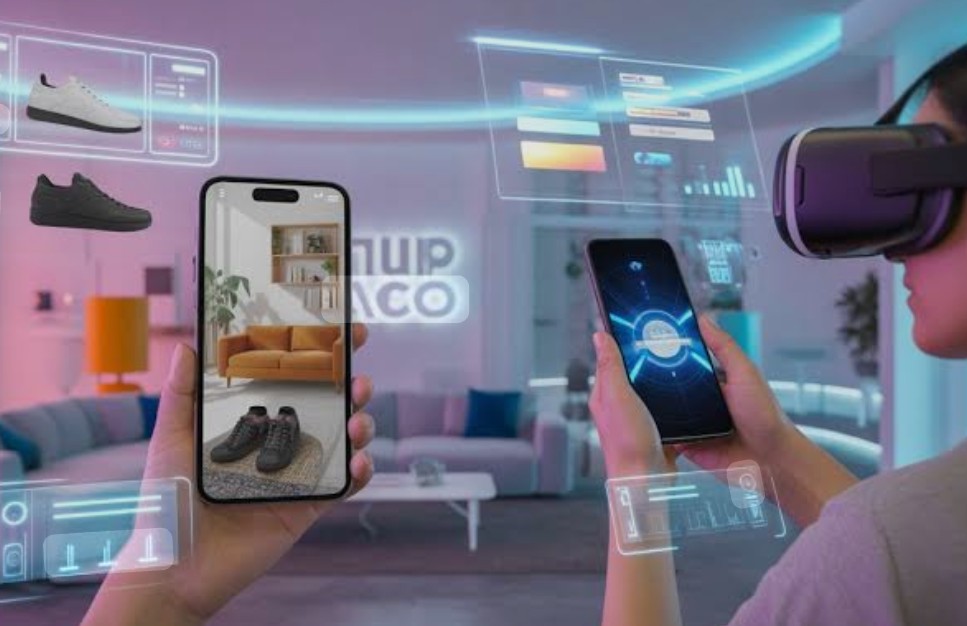
The Rise of AI-Powered Content and Shopping Assistants
Artificial intelligence has moved beyond automation—it now understands context, predicts intent, and delivers personalized experiences. AI-powered content and shopping assistants are at the heart of this transformation.
Platforms like Amazon and Google have integrated AI to recommend products, answer queries conversationally, and personalise user journeys. Instead of typing fragmented keywords, users now ask full questions such as “What’s the best budget smartphone under ₹20,000 with a good camera?” AI assistants analyse preferences, browsing history, reviews, and even real-time trends to generate tailored responses.
Smarter Content Creation
AI tools are also revolutionizing content marketing. Businesses use AI to:
. Generate blog drafts.
. Create product descriptions.
. Optimise headlines.
. Analyse audience behaviour.
. Predict trending topics.
Rather than manually guessing what users want, AI models study patterns and produce data-driven insights. This ensures that content aligns closely with user intent—making it more discoverable and engaging.
Conversational Commerce
Shopping assistants are now conversational. Chatbots and AI agents simulate human-like interactions, guiding users through the purchase journey. For example, a fashion e-commerce store can suggest outfits based on weather, occasion, and style preference—all within a chat interface.
This reduces friction in the buying process and significantly increases conversion rates. Consumers don’t just search anymore—they interact.
Immersive AR/VR Shopping Experiences
While AI enhances intelligence, AR (Augmented Reality) and VR (Virtual Reality) enhance immersion. Together, they are transforming how customers experience products online.
Brands like IKEA introduced AR tools allowing customers to visualize furniture in their homes before buying. Similarly, beauty brands enable virtual try-ons so customers can see how makeup shades look on their faces in real time.
Bridging the Gap Between Online and Offline
One of the biggest challenges of e-commerce has always been the inability to physically interact with products. AR and VR solve this problem by:
. Allowing 360-degree product visualisation
. Enabling virtual showroom tours
. Offering virtual fitting rooms
. Providing interactive product demonstrations
This immersive approach builds buyer confidence and reduces return rates.
The VR Storefront
Imagine entering a fully virtual shopping mall through a VR headset. Customers can walk through stores, interact with digital sales assistants, and examine products as if they were physically present. While still emerging, this technology signals a major shift toward experiential commerce.
Retail is no longer limited to a webpage—it’s becoming an environment.
The Shift from Traditional SEO to Generative Search Optimisation (GEO)
Perhaps the most significant transformation is happening in search itself. Traditional Search Engine Optimization (SEO) focused on ranking higher on search engine results pages (SERPs) by targeting keywords, backlinks, and on-page optimizations.
However, with the rise of AI-driven search experiences such as Google Search Generative Experience and conversational tools like ChatGPT, the search landscape is evolving.
What Is Generative Search Optimization (GEO)?
Generative Search Optimization (GEO) focuses on optimizing content so that AI systems can understand, interpret, and reference it in generated answers. Instead of competing for blue links, brands now compete to be cited or summarized in AI-generated responses.
In traditional SEO:
. The goal was to rank #1 on Google.
. Success was measured in clicks.
In GEO:
. The goal is to become a trusted source for AI-generated answers.
. Success is measured in mentions, authority, and visibility within AI summaries.
How GEO Differs from SEO
- Intent Over Keywords
AI prioritizes context and semantic meaning over exact keyword matching.
- Structured and Authoritative Content
Clear headings, structured data, and factual accuracy help AI models understand and reference content.
- E-E-A-T Signals
Experience, expertise, authoritativeness, and trustworthiness matter more than ever.
- Conversational Relevance
Content must answer real questions naturally and comprehensively.
The Integration of AI, AR/VR, and GEO
The future of digital success lies in integration.
Imagine this journey:
. A user asks an AI assistant for the best office chair.
. The AI provides summarised recommendations.
. The user clicks into a virtual showroom.
. They place the chair in their home using AR.
. A conversational assistant finalizes the purchase.
This seamless flow combines AI intelligence, immersive experience, and optimized content visibility.
Businesses that adapt to this ecosystem will gain a significant competitive edge.
Opportunities and Challenges
Opportunities
. Hyper-personalization
. Higher conversion rates
. Reduced product returns
. Increased customer engagement
. Stronger brand authority
Challenges
. Data privacy concerns
. High implementation costs
. Rapid technological change
. Measuring AI-driven visibility
Brands must balance innovation with transparency and ethical AI usage.
Preparing for the Future
To thrive in this new era, businesses should:
Invest in AI-driven content strategies.
Optimize content for conversational queries.
Implement structured data and schema markup.
Experiment with AR product visualization.
Focus on building genuine authority and trust.
Digital marketing is no longer about manipulating algorithms—it’s about serving intelligent systems that prioritize user value.
Conclusion
AI-powered content and shopping assistants, immersive AR/VR shopping experiences, and the transition from traditional SEO to generative search optimization are not temporary trends—they represent a fundamental shift in how people discover and buy products online.
The future of commerce is intelligent, immersive, and conversational.
Businesses that embrace AI-driven personalization, immersive product experiences, and GEO strategies will not just survive—they will lead. Those that cling to outdated SEO tactics risk becoming invisible in an AI-first world.